Interviews|September 2026

Iselin Steiro on understanding beauty

While her decades-long career in modeling was born out of happenstance – beginning when she was discovered in London in 2000 – Iselin Steiro is not only one of the most recognisable Nordic faces in fashion but also an architect and designer. As our latest campaign, Noticing everyday beauty, explores how beauty is perceived, defined and experienced, we spoke with Iselin to discuss the many ways beauty shapes our lives.

Fashion and architecture may seem like separate worlds, but for Iselin Steiro they are closely connected. Having spent more than half of her life in fashion and more recently established herself as an architect and designer, she sees both fields as ways of engaging with the objects, environments and ideas that surround us. 


What do you think draws us to a concept or idea?    


‘I’ve tried to read up on this. During my studies in architecture, I felt that we didn’t get into this enough – it was spoken about more as a magical thing – so I've been trying to find out what beauty is, how our surroundings affect us.  

What I've read so far is that everything we encounter in life – space, clothing, art – is going to have to bypass the intellect and go into an emotional response and a physiological response. Then there's also the stuff you can see and talk about, an intellectual thing. But it’s a mix, all these things are working at the same time. It is subjective, but there are some things that are universal, and it’s tied to personality as well. There’s a gut feeling – but I think that gut feeling is informed by a lot of experiences.’ 

Growing up in Lofoten, Norway, a landscape known for its dramatic natural beauty, Iselin developed what she describes as a positive materialism: a deep appreciation for the physical world and the environments we shape and inhabit. 
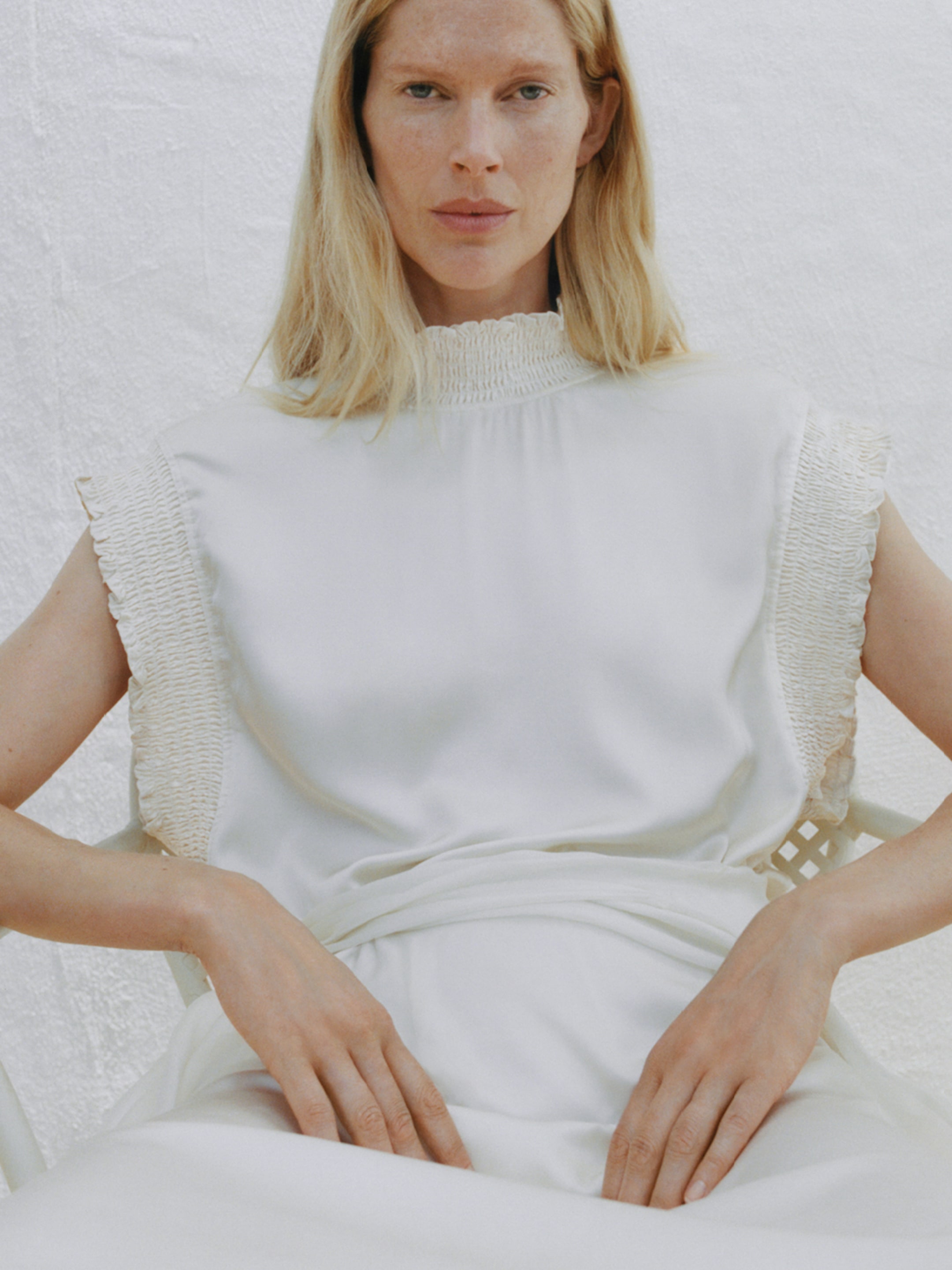
 

A person with long blonde hair sits wearing a white textured sleeveless dress against a white textured background.

What do you do to find beauty?  


‘For me, it’s nature – being in nature without headphones. Going for a walk or a run in the forest, or the mountain. Being there with all your senses is a very good way. I'm from the north of Norway so maybe that’s natural to me because I grew up with it, with nature being so present in my life. I grew up knowing that’s a space to connect with the world, somehow. You feel very small in a good way. Maybe it's difficult for me to describe, it’s a part of me, I always want to go back to that if I'm stressed or something. I want to go on a walk in the mountain and just watch the sky because suddenly all the stressful things in your life just disappear. You feel like you're part of something bigger than you. It's a very nice humbling feeling. There's so much beauty in what's already there. We don’t need to necessarily create something; we can just look up at the sky at the northern lights and it's already there.’ 

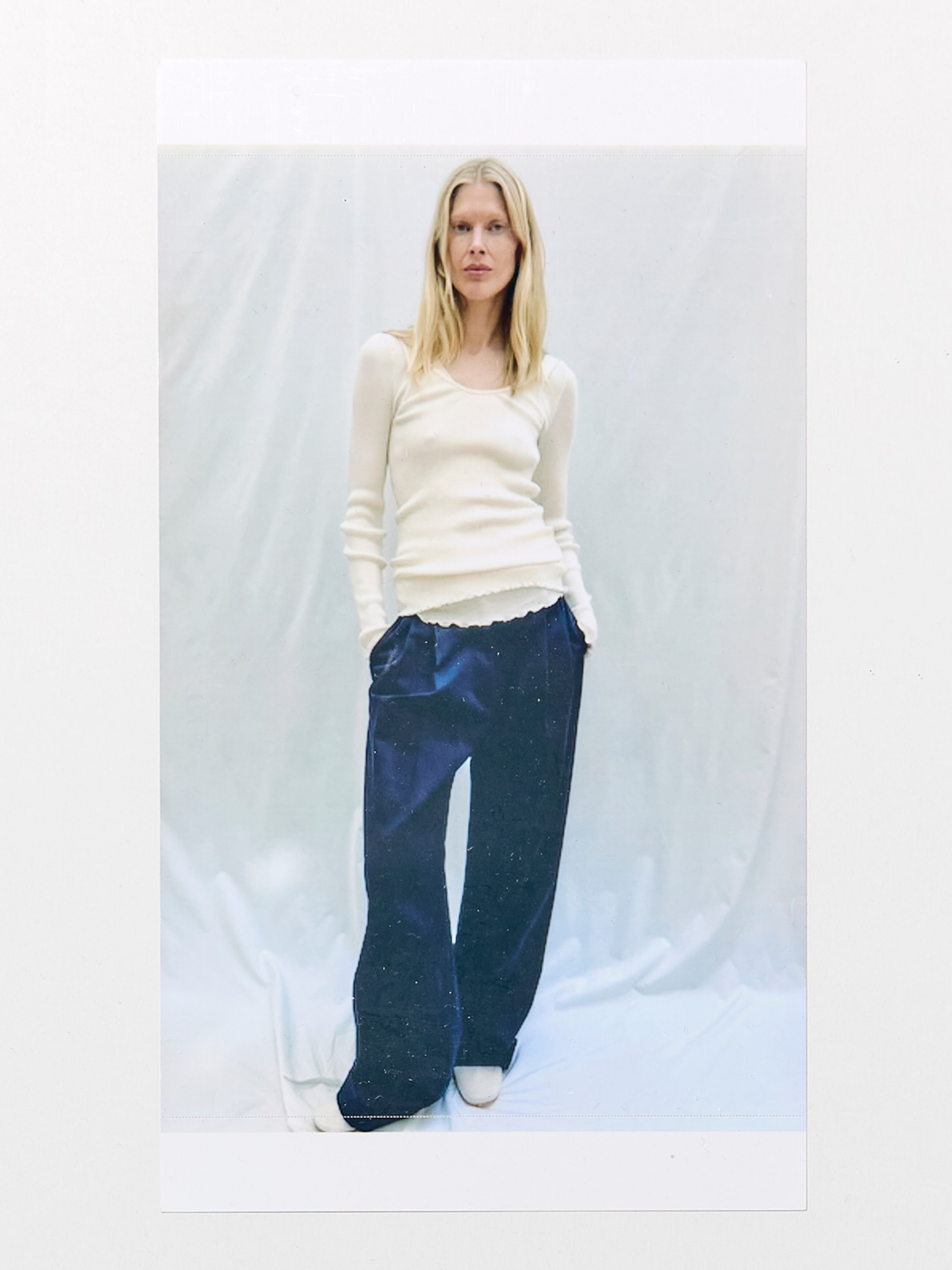
A person with long blonde hair wearing a white long-sleeve top and loose blue trousers, standing against a light-gray backdrop.
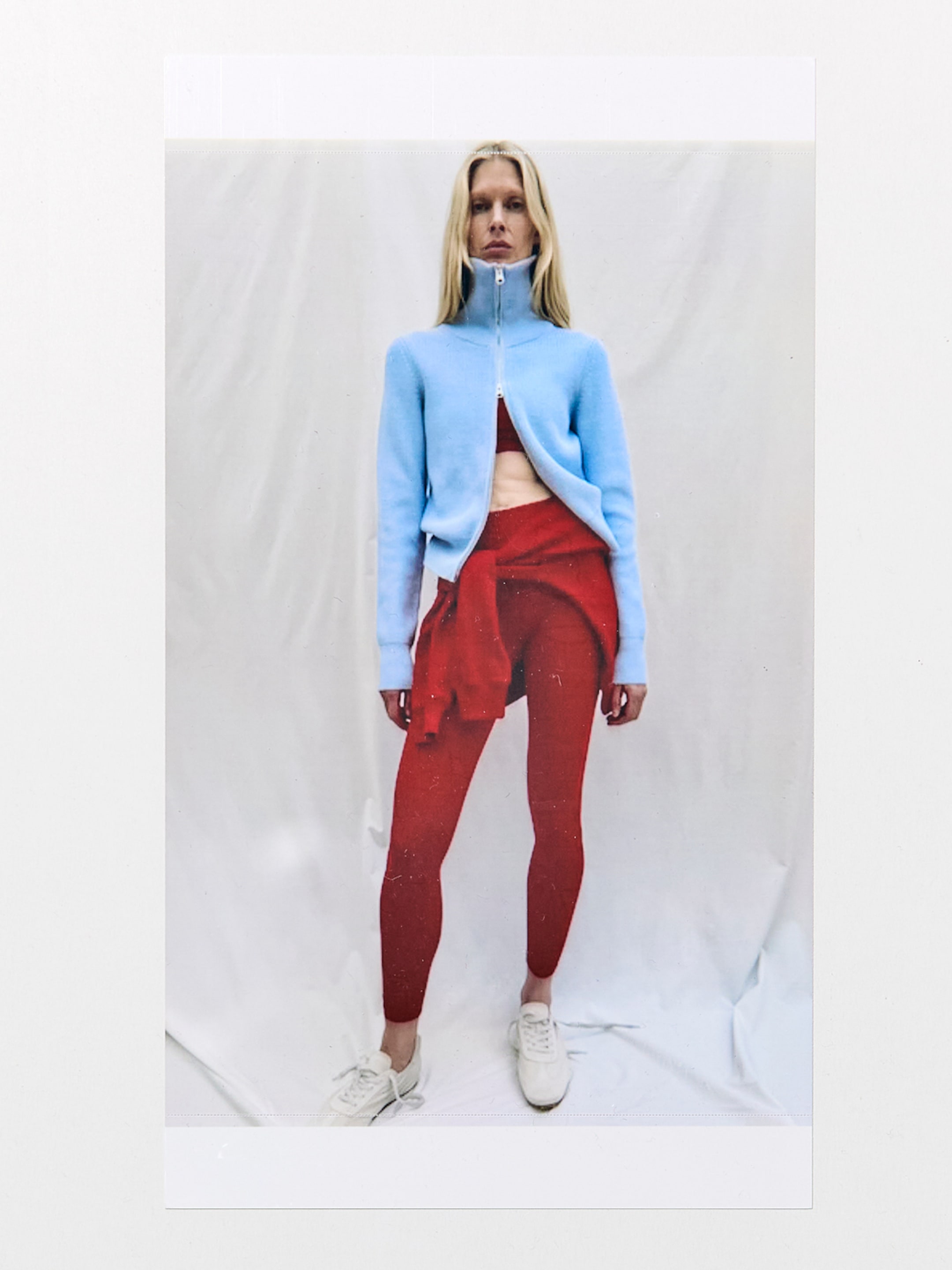
A person in a blue zip-up sweater over a red sports top, red leggings, sneakers, and a tied-around red sweater stands against a white backdrop.

What is beauty?  


‘It’s a feeling, I think. I think you know when you see something, hear something, that it reaches something in me and it's pleasant. A summer breeze. A sparkling light. Also ease. To me beauty is somehow a combination of harmony and ease. It needs to be effortless somehow. You try to find the right amount for every ingredient. When everything is adjusted to the right individual amount then, it's there. You have to sort of try, a little of that and that. Then there it is, you know it.’ 

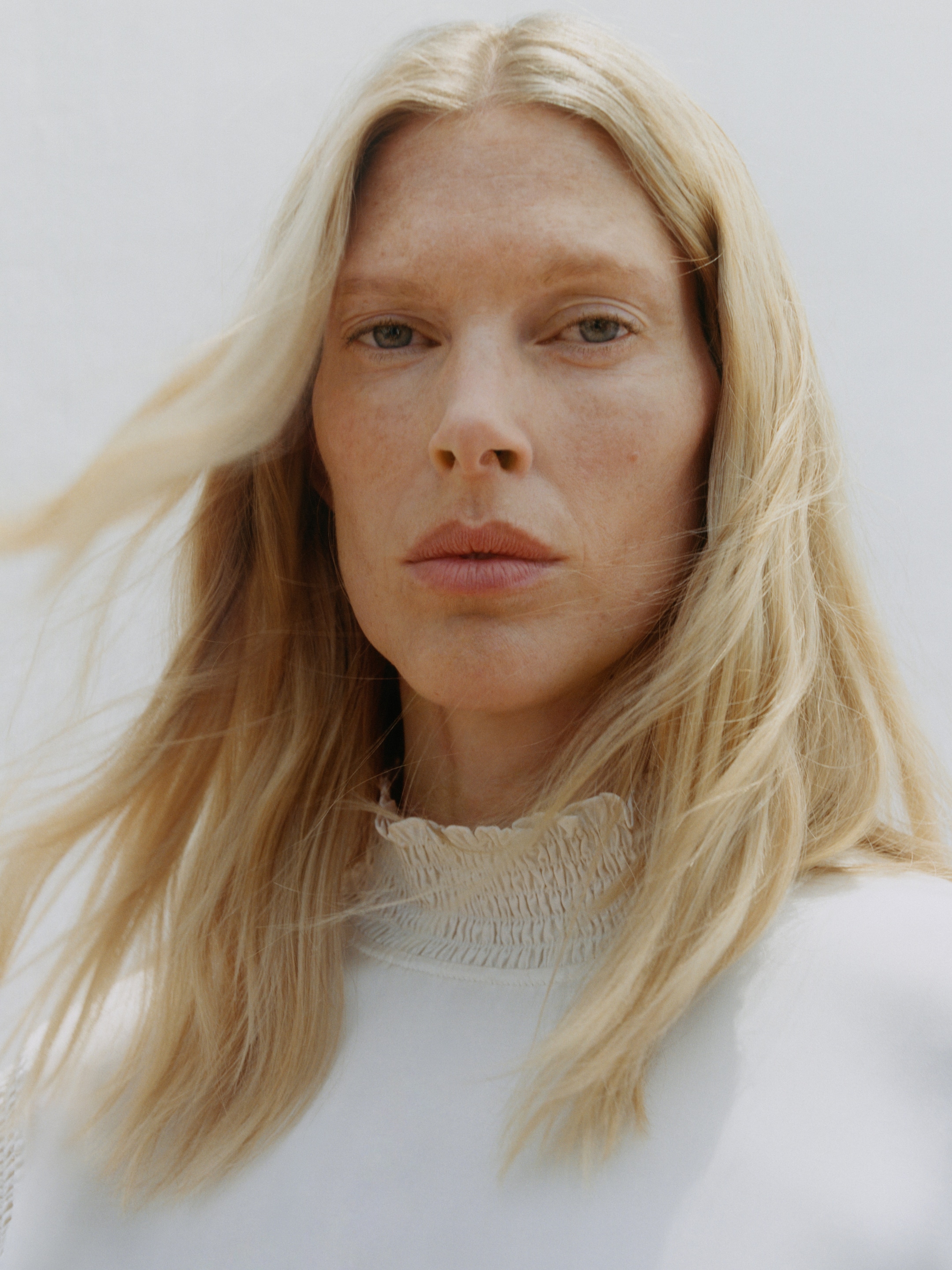
A person with long blonde hair gazes forward, wearing a light-colored high-collared top against a neutral background.

Does connecting with beauty require a certain state of mind?  


‘It requires you to be present, to really see or really hear or really feel. I think the way we live now with our phones, everything happens so fast, it can be hard to really notice. I think it does require attention and presence.’  

In fact, her notion of beauty is rooted not in perfection, but in personality and character.  

‘For something to be interesting, there needs to be an element of quirk or personality or something that breaks with the perfectness. I think that’s an element that maybe is gonna save us from computer-generated everything – we need a feeling of something being a bit imperfect for it to be intriguing, to keep the attention.’