Design
A Swedish silk story
Located on a quiet backstreet on the island of Södermalm in Stockholm, just a few minutes from our design studio, K. A. Almgren stands today as the last preserved silk weaving mill in the Nordic region. Established in the 1830s following an elaborate scheme of industrial espionage, the company became a specialist in handwoven silk scarves, a major fashion item of the time.
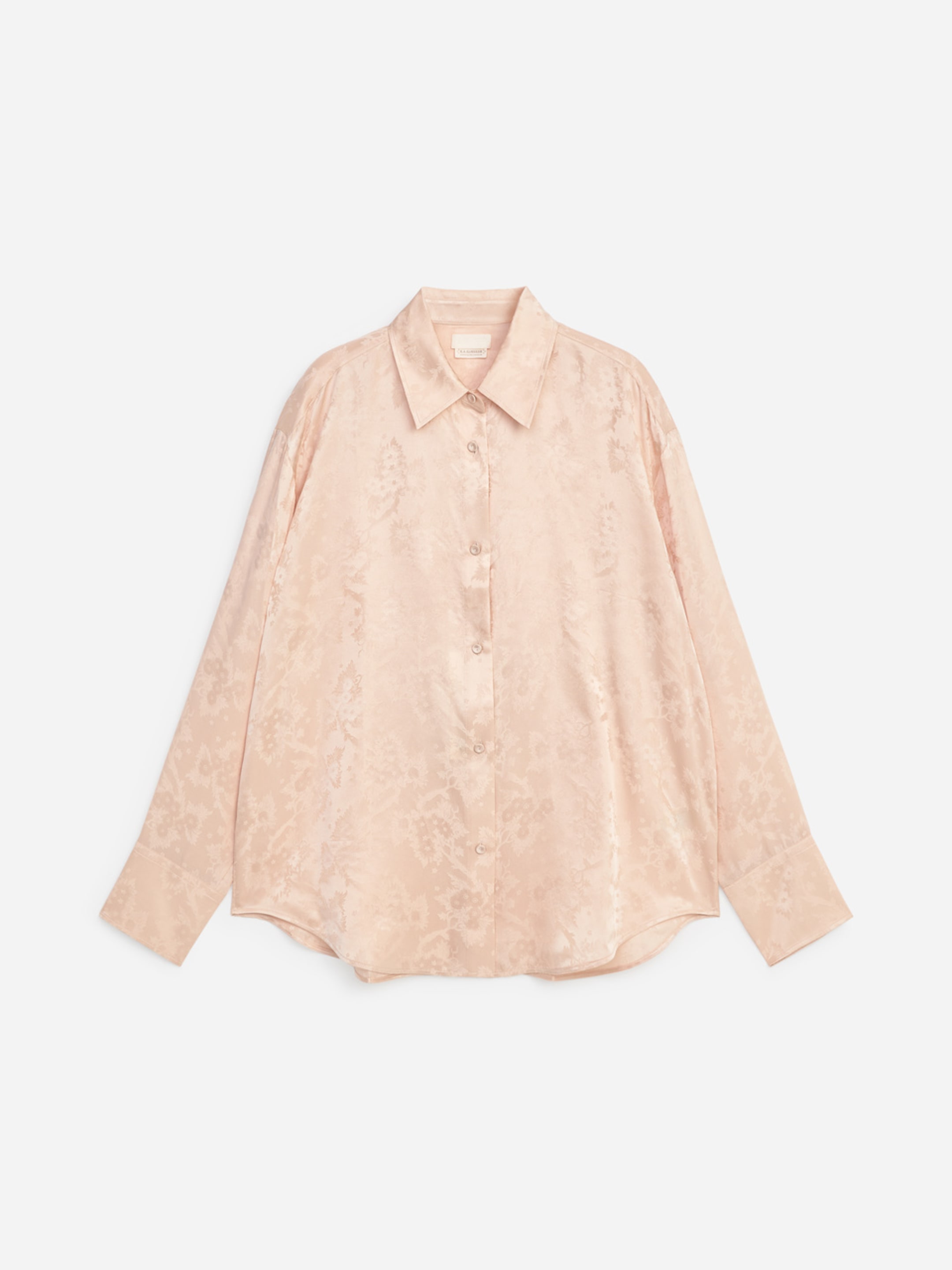
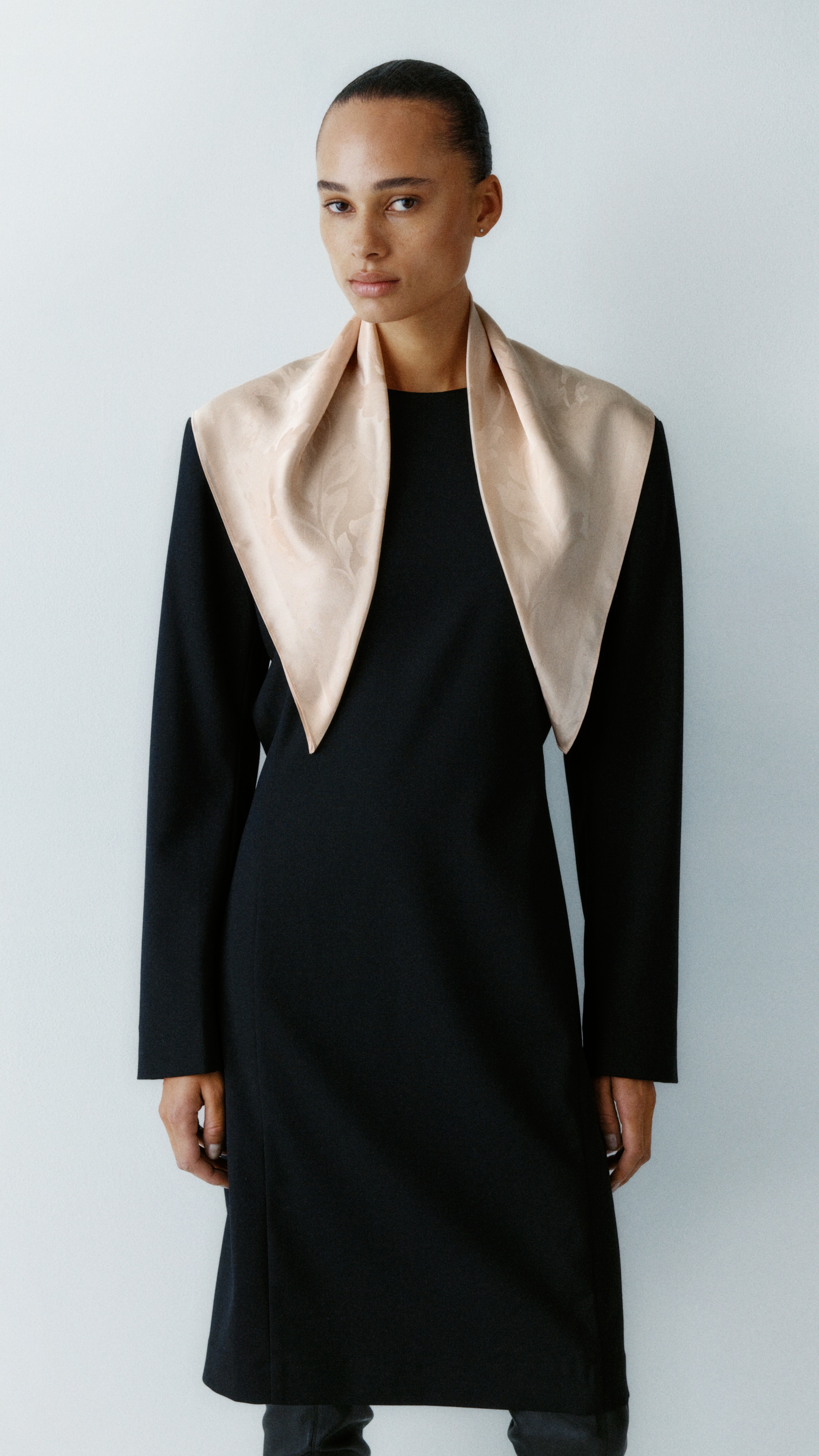
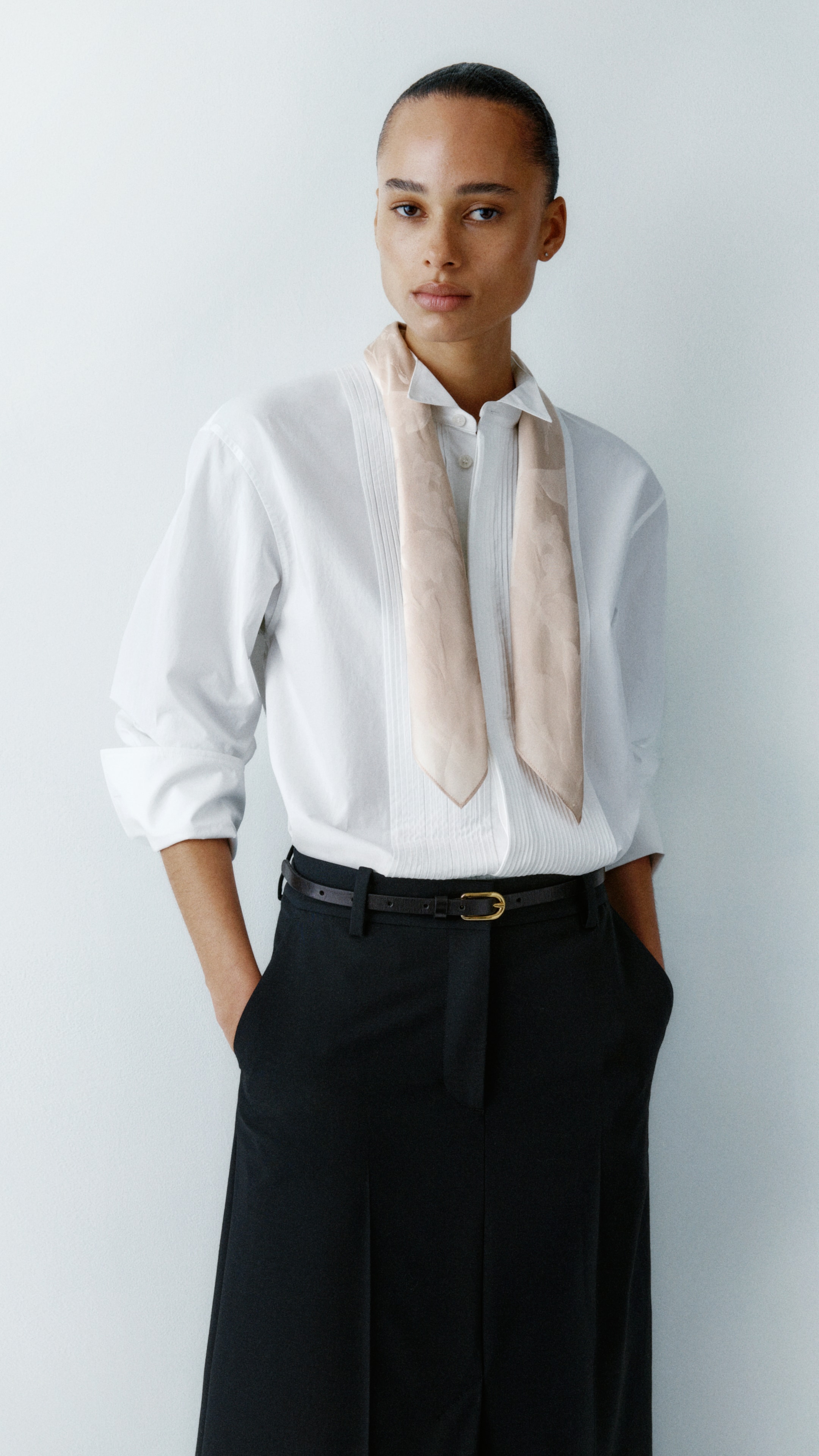
The silk scarf is the centrepiece of a new collaboration between ARKET and K. A. Almgren silk weaving mill and museum, a capsule collection made from 100% silk and drawing on original pattern sketches and textile fragments from the museum’s collections.
‘Silk is a material that can’t be rushed, and it has never really been possible to produce it at home, like linen or wool. It has always been an exclusive material, and its production has always been surrounded by a certain mystery. Originating in China, silk has long been a desirable material. It’s beautiful, lustrous, soft and strong, and it feels wonderful to touch,’ says Tove Karlsson, a historian and teacher who works as a museum educator at K. A. Almgren.
In 1805, silk weaving was revolutionised by the French invention of the Jacquard mechanism, which made it possible to produce complex, naturalistic motifs with great precision, and to repeat them again and again. The new technology used punched cards to tell the loom which threads to lift, essentially programming the pattern as it was woven, much like an early computer. France kept the technology closely guarded. If you weren’t French, you were not even allowed to see it.
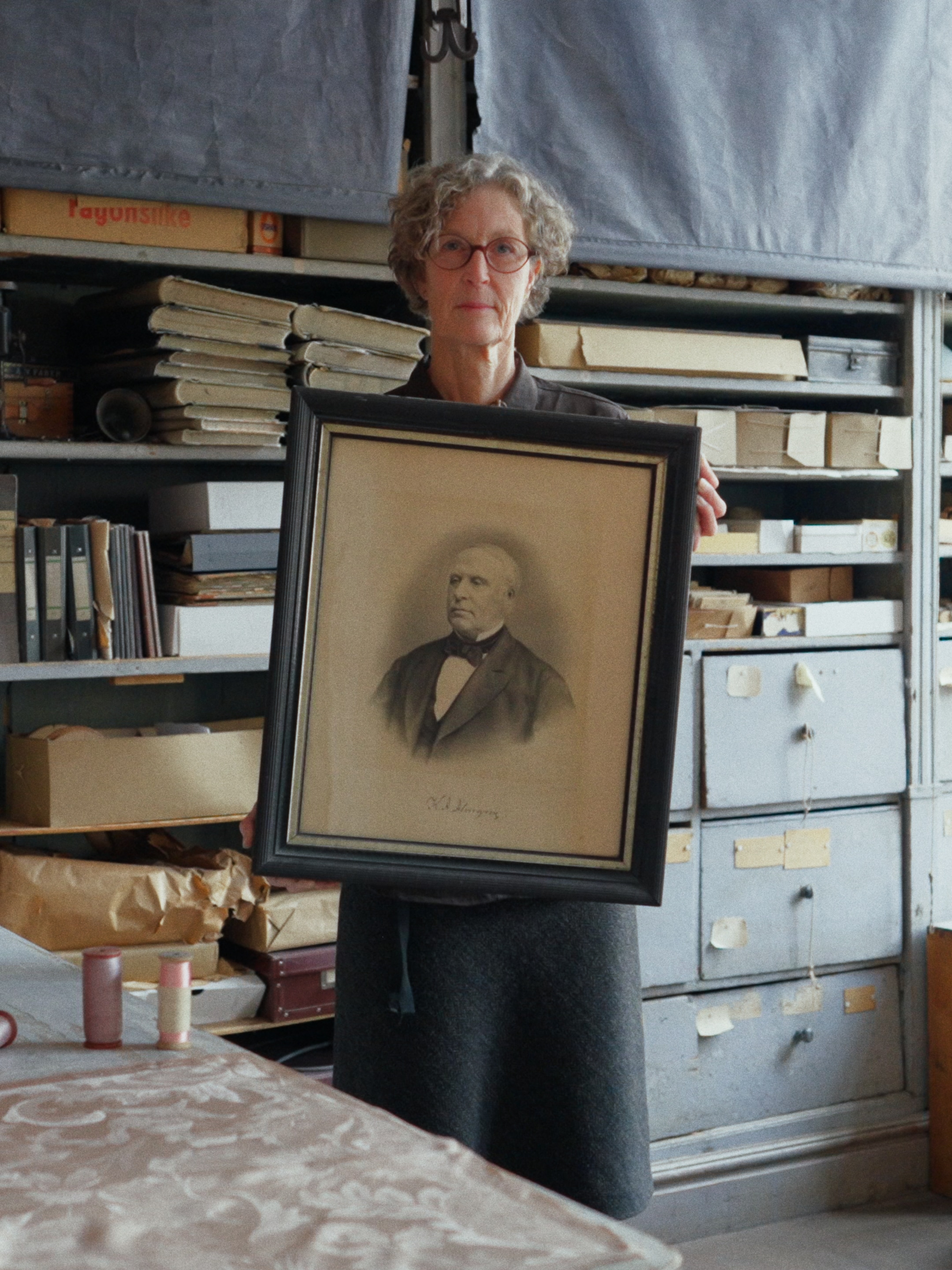
When Knut August Almgren – K. A. – was in his twenties, his brother sent him to France. He learnt French and infiltrated a silk weaving mill in Lyon, where he apprenticed for two years while pretending to be a Frenchman. Once he felt he understood the machinery, he bought several Jacquard mechanisms and smuggled them out of France despite a strict export ban.
He returned to Stockholm and in 1833, aged 27, he established his own weaving mill. At the time, there were more than 20 silk weaving mills on Södermalm alone. Almgren would come to specialise in exclusive, handmade silk scarves. Tove Karlsson describes them as ‘luxury for ordinary people’.
‘They were one of the great trend items of the nineteenth century. The fine silk scarf was what you wore to church. You might want to show that you came from a prosperous farm, or simply look a little finer than your neighbour. They also became common gifts and were often given as confirmation presents.'
‘The square shape meant the scarves could be worn equally well over the head or around the shoulders. At weddings, they could also be tied together and hung on the wall as a backdrop behind the couple, creating an impressive display in the home. Some scarves were made with two different sides, one more serious and another more joyful, perhaps decorated with flowers. Depending on how they were folded, the same scarf could be used for different occasions. When they were not being worn, they were carefully folded away, and it was common for them to be passed down between women over several generations.’
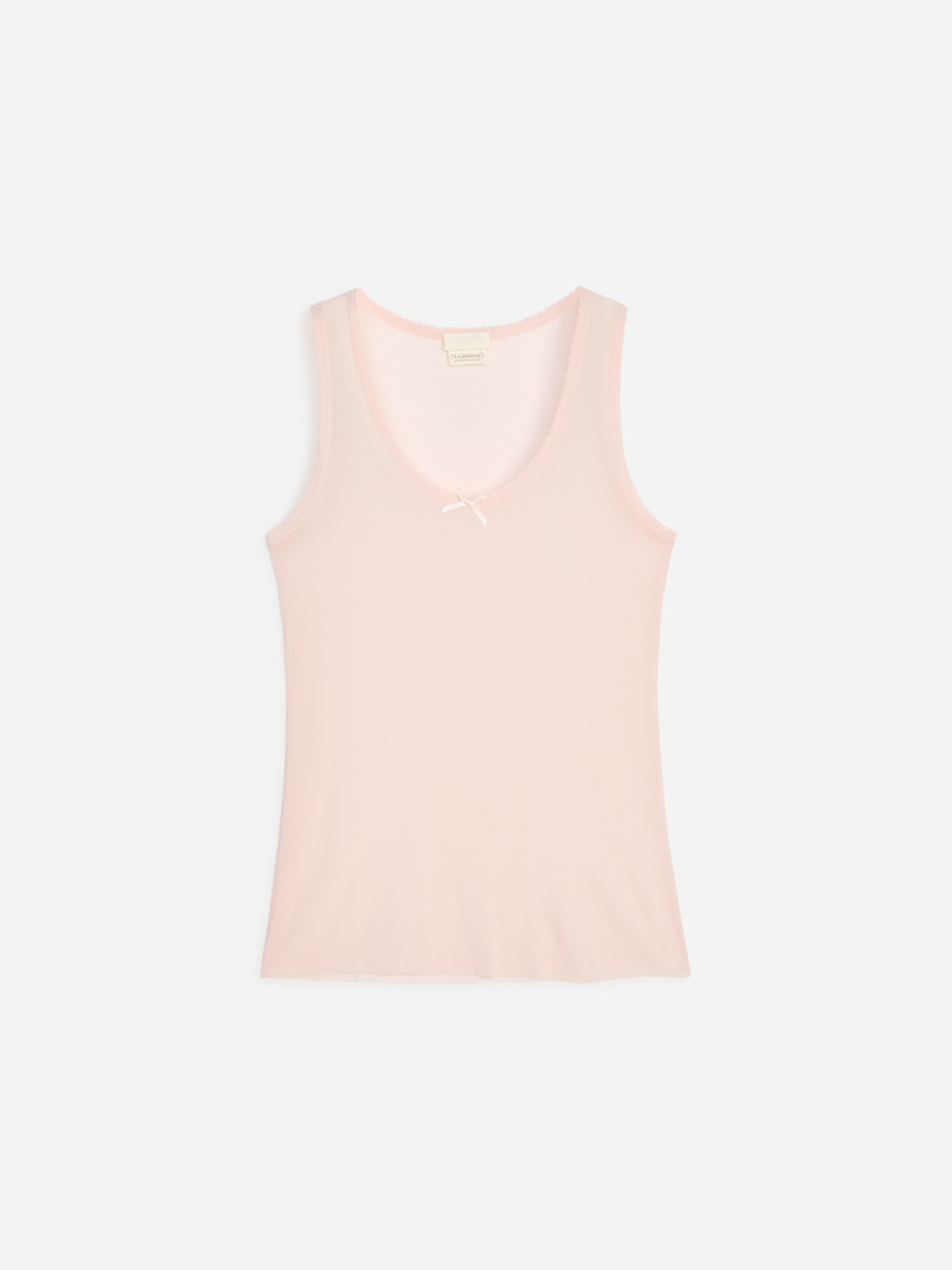
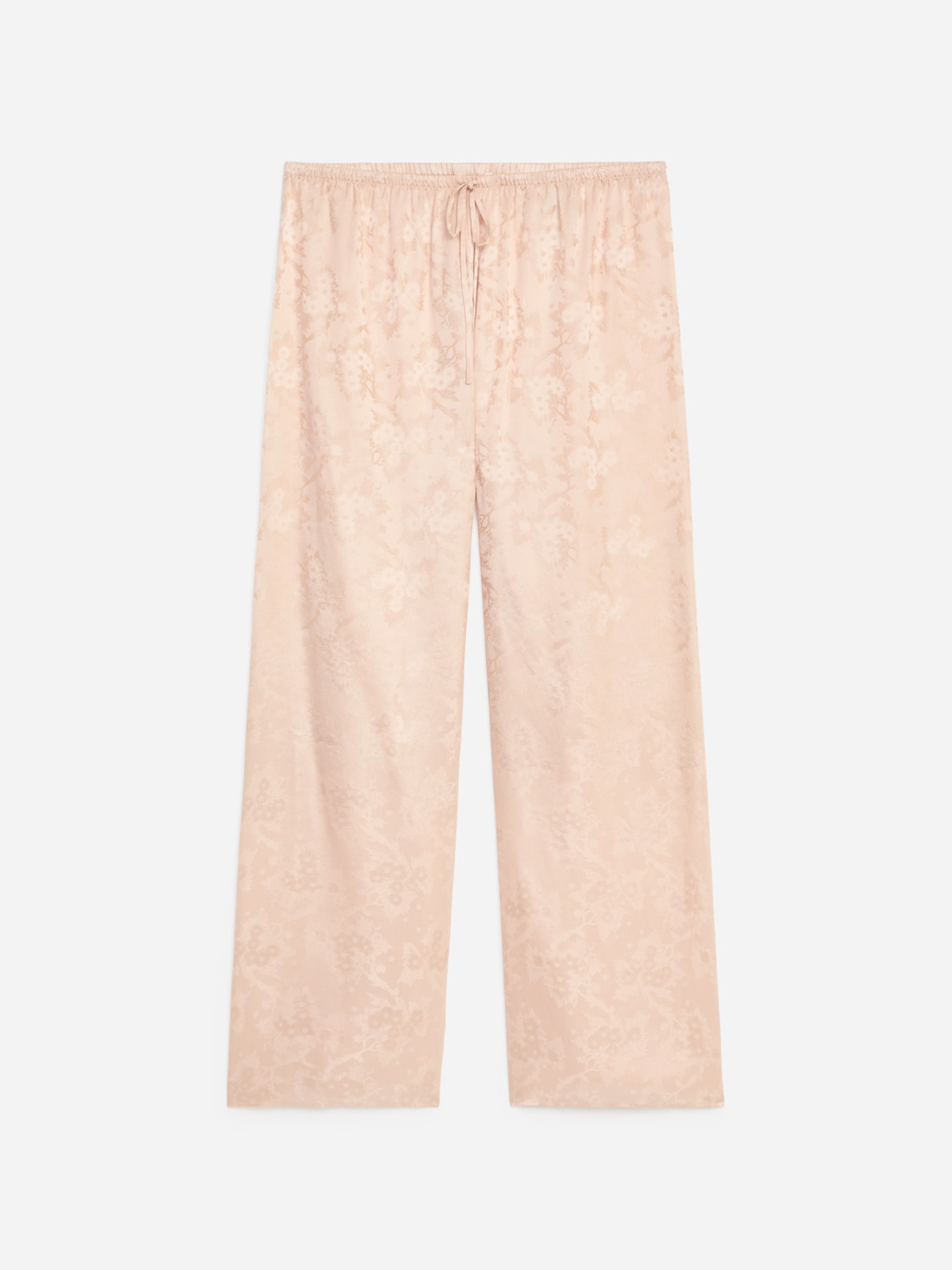
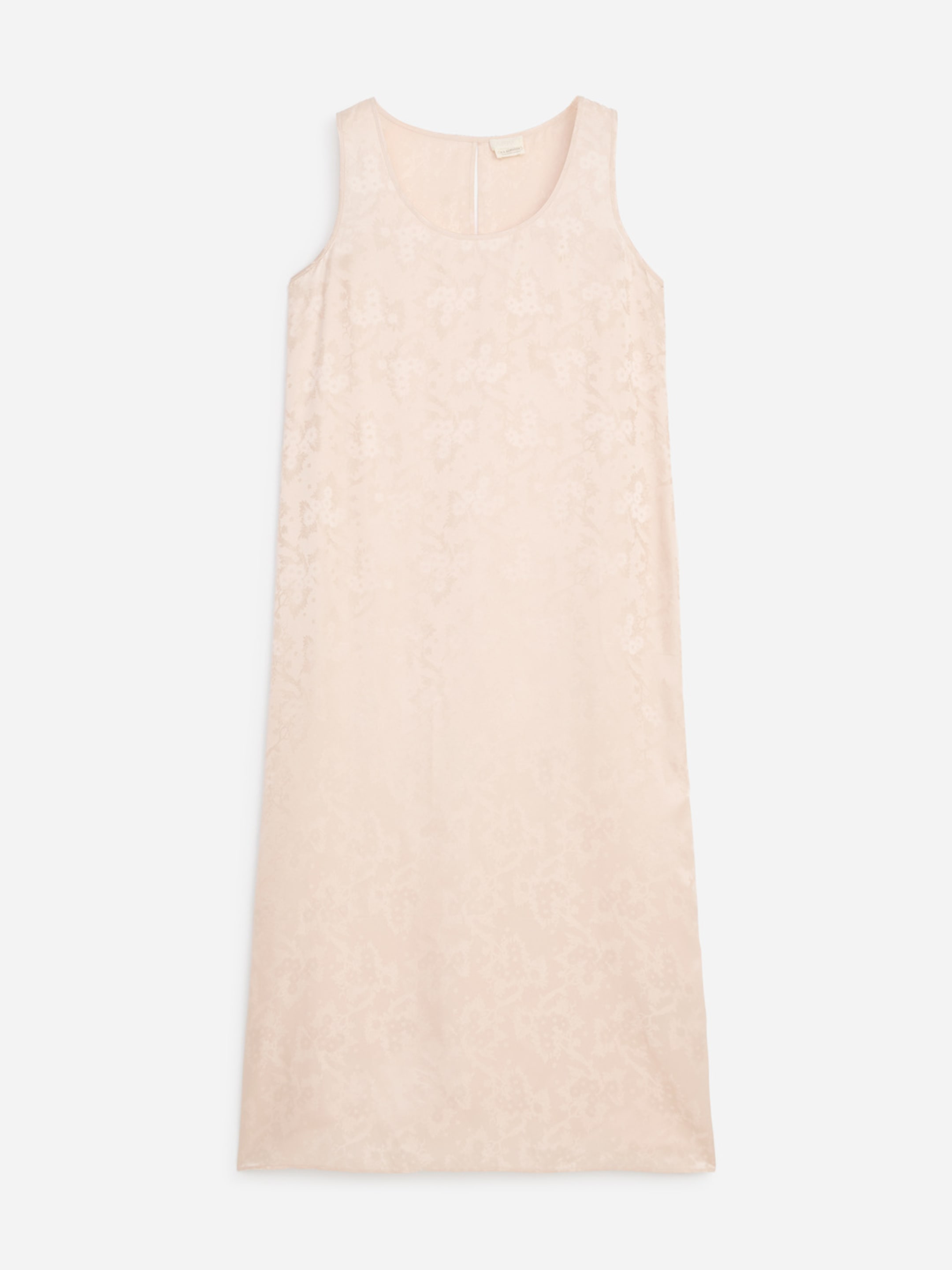
The collaboration between ARKET and the K. A. Almgren museum includes seven pieces, all made from pure silk. For the silk scarf, our print designer used an original pattern drawing from the museum’s collection, including a quarter mysteriously left blank in the upper-right corner, while other pieces feature a repeating pattern developed from an archival floral motif. The pale pink tone is inspired by a colour found on the interior walls of the Södermalm factory building.
The museum is located in the building constructed for the weaving mill in 1862. At its height, almost 300 people worked here, nearly all of them women. The original machinery is still in use today, with a weaver employed to continue working on the historic Jacquard looms.
‘Coming into this building today, you enter their world in a way. The mill was organised so that every employee performed a specific task. If you were a weaver, you wove. If you prepared the warp, that was your job. If you wound thread onto bobbins, you wound thread. You can still see traces of that work in the building. The floors have been worn down by people standing in the same places. You can see where someone stood at a treadle, perhaps at the same workstation for twenty or thirty years. The whole environment tells that story,’ says Tove Karlsson.
‘Working here, being around these historic textiles, has made me much more humble in the face of textile production. You see how much goes into it, both in terms of design and, above all, labour. I think anyone connected to the textile industry gains an understanding of how much actually goes into making a garment or a piece of fabric. Fabric is not simply a material that exists somewhere in the background, ready for us to pick up and use.’
More editorial
A Swedish silk story
Design|November 2026
Located on a quiet backstreet on the island of Södermalm in Stockholm, just a few minutes from our design studio, K. A. Almgren stands today as the last preserved silk weaving mill in the Nordic region. Established in the 1830s following an elaborate scheme of industrial espionage, the company became a specialist in handwoven silk scarves, a major fashion item of the time.

Lolita Jacobs is a little bit different
interviews|October 2026
In her sister’s words, Lolita Jacobs’ style is ‘French classic meets eccentric English, Fran Lebowitz meets flea market with a bandana tied around her waist’. As fashion director of L’Étiquette Femme – a Paris style institution – she is known for an approach that balances simplicity with nonchalance and unexpected details. ‘I always wear things that are simple and relatable, but I make sure to make them special to me’, Lolita says.
Suede
Care guides|October 2026
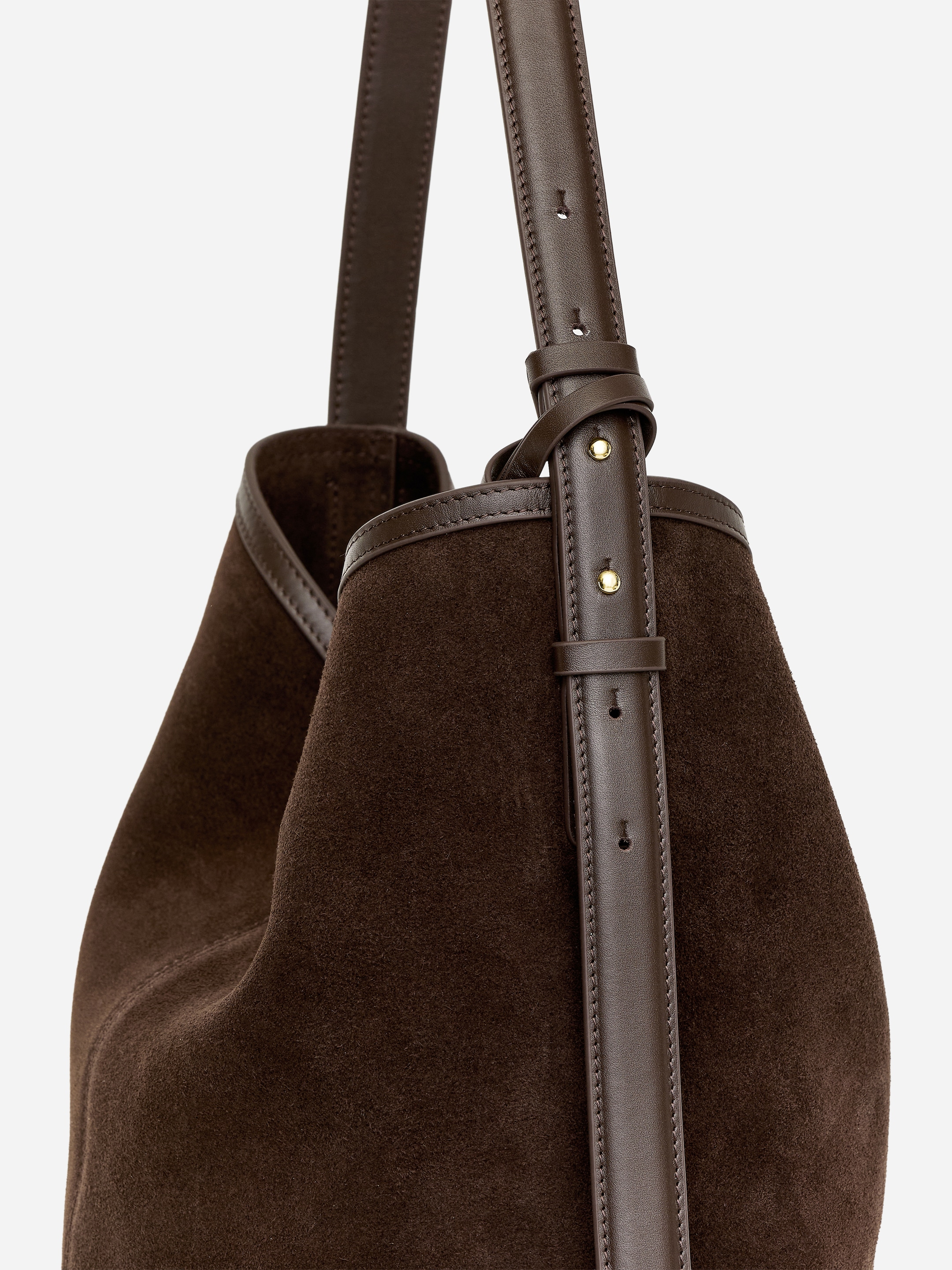
Suede is crafted from the underside of leather hides, offering a soft, fuzzy finish. Due to its delicate nature, it is important to properly care for your suede products to extend their lifespan.
Wool
Care guides|October 2026
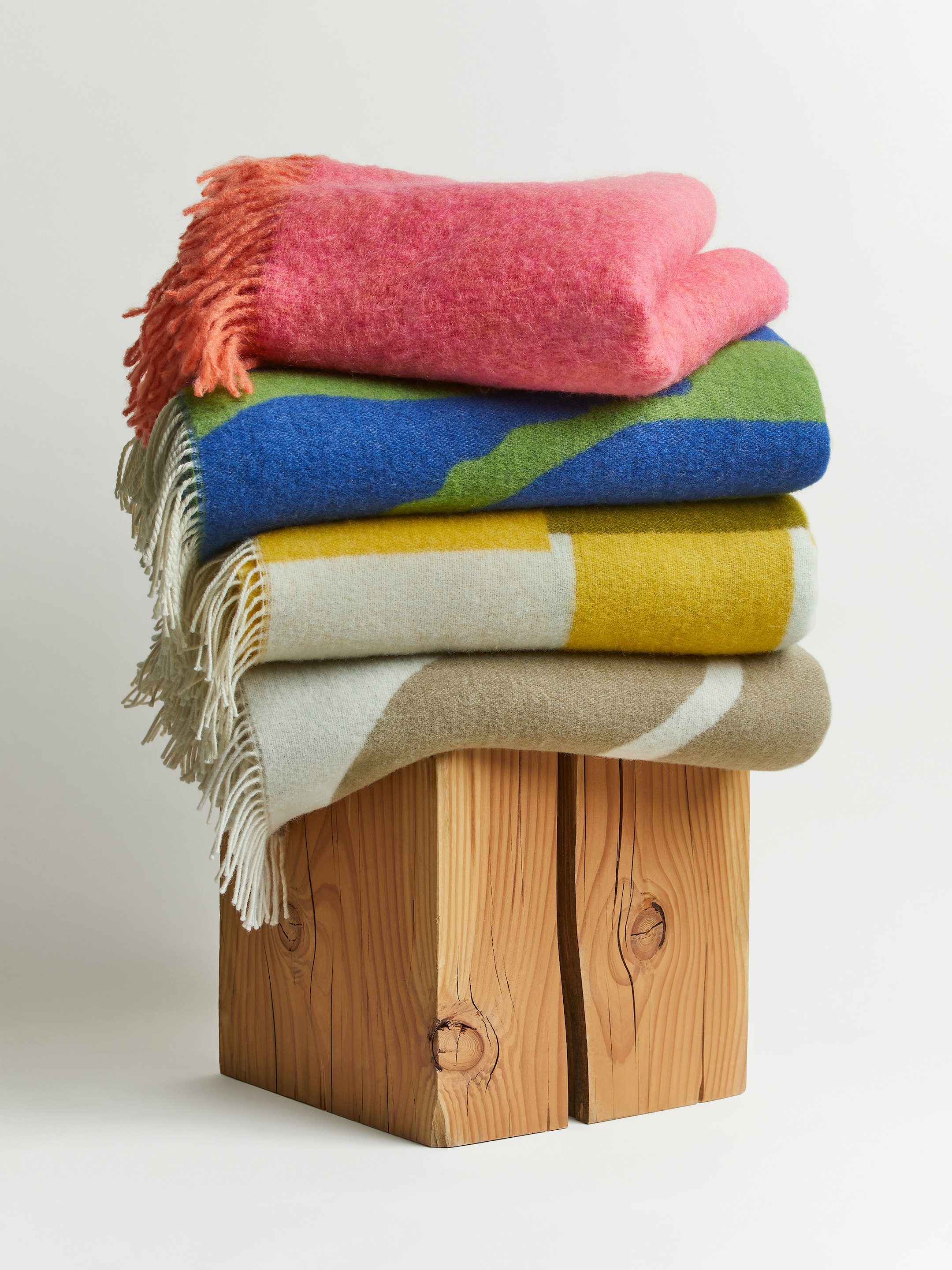
Wool comes in many forms, each with its own distinctive qualities. Naturally breathable and moisture-wicking, wool is also resistant to odours and creasing. Whether merino wool, lambswool, cashmere, mohair or alpaca, all benefit from gentle care.